
PCBs cleaned after fabrication and assembly
Cleaning PCBs after fabrication and assembly is a critical step in ensuring the quality and reliability of the final product. During the pcb fabrication and assembly process, various contaminants, such as flux residues, soldering materials, and dust particles, can accumulate on the surface of the PCB. These contaminants can affect the performance of the board, leading to issues like electrical shorts, poor solder joints, and corrosion over time. Therefore, effective cleaning is essential to remove these residues and ensure that the PCB functions as intended.
One of the primary reasons for cleaning a PCB after fabrication and assembly is to remove flux residues. Flux is a chemical compound used during soldering to improve the flow of solder and ensure strong, reliable joints. However, after the soldering process, flux residues can remain on the surface of the PCB, which may cause corrosion or create conductive paths that could lead to short circuits. There are two main types of flux residues: rosin-based and water-soluble. Rosin-based flux can be more challenging to remove, while water-soluble flux typically requires a simple wash with water or an appropriate solvent.
The most common method used in PCB cleaning after fabrication and assembly is ultrasonic cleaning. This method involves immersing the PCB in a cleaning solution, usually a mixture of water and an appropriate solvent, while applying ultrasonic waves. The ultrasonic waves create tiny bubbles in the cleaning solution, which implode when they contact the PCB’s surface. This process effectively removes flux residues, dust, and other contaminants from hard-to-reach areas, such as between pins and underneath components. The ultrasonic cleaning process is highly effective, as it provides thorough cleaning without causing damage to the delicate components on the board.
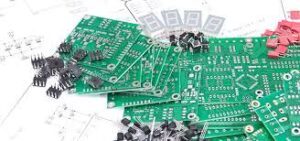
How are PCBs cleaned after fabrication and assembly?
In addition to ultrasonic cleaning, manual cleaning methods are sometimes used for more localized cleaning or when ultrasonic cleaning is not feasible. Manual cleaning typically involves using soft brushes or wipes along with cleaning solvents like isopropyl alcohol to scrub away residues. This method is more labor-intensive and can be less consistent than ultrasonic cleaning, but it is still effective for smaller PCBs or when precision cleaning is needed in specific areas.
Another popular method for cleaning PCBs after fabrication and assembly is the use of automated cleaning machines. These machines often employ spray cleaning or immersion techniques, where the PCB is sprayed or dipped into a cleaning solution. The solution is then agitated, either by the force of the spray or through the movement of the PCB, to dislodge and remove contaminants. These machines are particularly useful for cleaning large volumes of PCBs in a consistent and efficient manner. The cleaning solutions used in these machines are specially formulated to target specific contaminants and are often paired with rinsing and drying steps to ensure the PCB is thoroughly cleaned.
In addition to removing flux and soldering residues, cleaning PCBs after fabrication and assembly is also necessary to ensure that the board is free from environmental contaminants like dust, grease, or oils that may have accumulated during handling. These residues can interfere with the PCB’s performance by affecting the electrical connections or causing heat buildup. As part of the cleaning process, PCBs are often rinsed with deionized water to remove any remaining cleaning solution or chemicals.
Finally, after cleaning, it is essential to thoroughly dry the PCB to prevent any moisture from causing corrosion or electrical issues. This can be done through various methods, such as air drying, using a convection oven, or employing a specialized drying chamber. Proper drying ensures that the PCB is free from moisture and ready for any final inspection or testing.