
automation improve PCB manufacturing yield
Automation plays a pivotal role in enhancing the yield of printed circuit board (PCB) manufacturing, a critical aspect of the electronics industry. Yield refers to the number of defect-free boards produced from a manufacturing process relative to the total number of boards produced. High yield is essential for profitability, competitiveness, and customer satisfaction. As the complexity of PCBs increases, traditional manual methods are often insufficient, making automation an indispensable tool for improving yield.
One of the primary ways automation enhances yield is through the minimization of human error. In manual PCB assembly, operators can inadvertently introduce defects due to fatigue, lack of attention, or inconsistent techniques. Automated systems, including robotic pick-and-place machines and automated optical inspection (AOI) systems, significantly reduce the potential for human error. These machines can place components with high precision and consistently adhere to the design specifications, resulting in fewer defects and rework. By streamlining these processes, manufacturers can increase the overall reliability of the PCBs produced.
Moreover, automation accelerates production speeds, allowing manufacturers to produce more pcb manufacturing in a shorter timeframe. Faster production leads to higher throughput, which in turn improves yield. Automated systems can operate continuously without breaks, significantly increasing the number of boards processed per hour compared to manual labor. Additionally, automation enables just-in-time manufacturing, reducing lead times and increasing responsiveness to market demands. The ability to produce large quantities quickly helps manufacturers optimize their resources and reduce costs, ultimately contributing to improved yield.
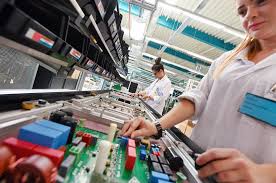
How does automation improve PCB manufacturing yield?
Another critical factor in yield improvement is the ability to monitor and control the manufacturing process in real-time. Automated systems are equipped with sensors and data collection capabilities that allow for constant monitoring of various parameters, such as temperature, humidity, and machine performance. This data can be analyzed to identify trends and anomalies, enabling manufacturers to implement corrective actions before defects occur. For instance, if a machine begins to operate outside its specified parameters, alerts can be triggered to prompt immediate intervention. By addressing potential issues proactively, manufacturers can prevent defects that would otherwise impact yield.
In addition to real-time monitoring, automation facilitates better process control and standardization. Automated systems follow predefined parameters and processes consistently, which is crucial for achieving uniform quality across all produced PCBs. Variability in processes can lead to defects, but by standardizing operations through automation, manufacturers can ensure that every board produced meets the required specifications. This consistency not only improves yield but also enhances customer satisfaction, as clients receive products that meet their expectations.
Furthermore, automation supports advanced inspection techniques that are essential for maintaining high yield rates. Automated optical inspection (AOI) and X-ray inspection systems can quickly and accurately identify defects in solder joints, component placement, and other critical areas. These systems can detect issues that might be missed by the human eye, allowing for early intervention and reducing the likelihood of defective boards reaching customers. By integrating these advanced inspection technologies into the manufacturing process, companies can significantly increase their yield by ensuring that only high-quality PCBs proceed to final assembly.
Lastly, automation streamlines data management and traceability throughout the PCB manufacturing process. Automated systems can track each board’s journey through production, documenting key metrics such as process times, machine settings, and inspection results. This data can be invaluable for identifying recurring issues and implementing continuous improvement initiatives. By analyzing this information, manufacturers can refine their processes, leading to higher yields over time.
In conclusion, automation significantly improves PCB manufacturing yield through enhanced precision, increased production speeds, real-time monitoring, process standardization, advanced inspection techniques, and effective data management. As the electronics industry continues to evolve and demand for high-quality PCBs increases, automation will remain a crucial component in achieving high yield rates. By embracing automation, manufacturers can ensure they remain competitive in a fast-paced market while delivering reliable products that meet customer expectations.